What is Frozen Dough?
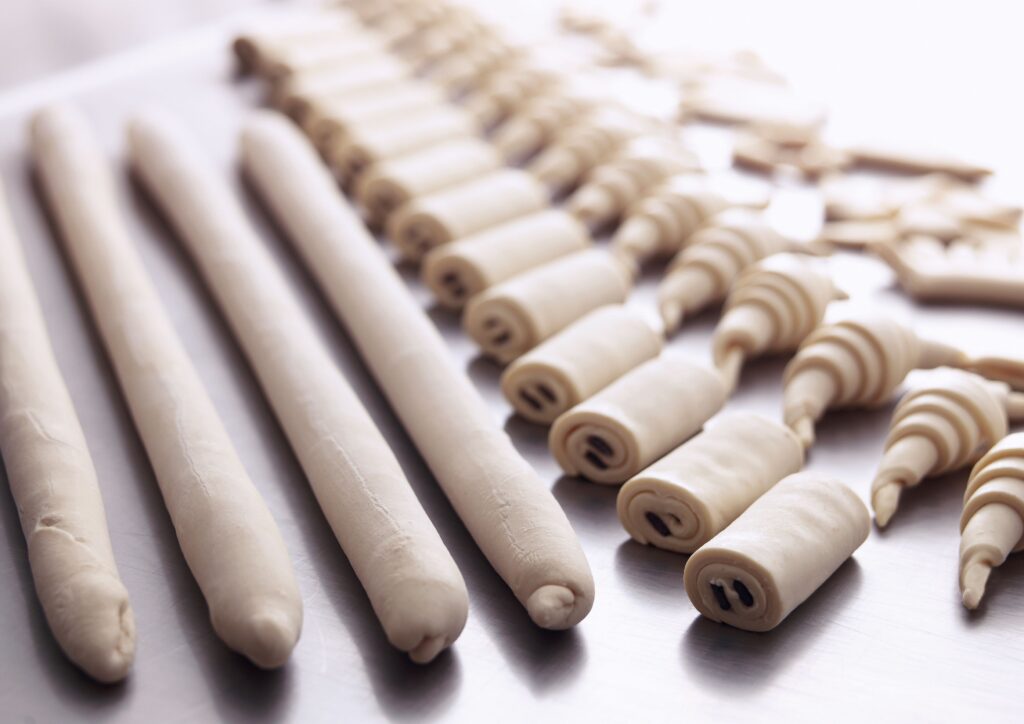
Frozen dough refers to semi-finished bakery products that have been mixed, shaped, and rapidly frozen before the final proofing and baking stages. Unlike traditional dough, it is engineered to be stored at sub-zero temperatures (typically -18°C or below) for several months. This technology acts as a “pause button” on fermentation, allowing the dough to retain its biological potential until a baker is ready to thaw and bake it.
The Process Involved
Creating high-quality frozen dough requires a disciplined technical workflow to protect the delicate yeast cells and gluten structure:
Controlled Mixing: Ingredients are mixed using chilled water to keep the dough temperature low (20°C to 24°C), preventing premature fermentation.
Rapid Freezing: The shaped dough pieces undergo blast freezing to reach a core temperature of -10°C to -12°C quickly. This speed is critical to minimize the size of ice crystals that could otherwise puncture yeast cells or tear the gluten network.
Stable Storage: Maintaining a consistent cold chain at -18°C prevents “freeze-thaw” cycles that degrade dough quality over time.
Thawing & Proofing: Before baking, the dough is slowly brought back to temperature (often in a retarder-proofer) to reactivate the yeast for a final, consistent rise.
Why the Industry is Switching to Frozen Dough
The transition from “scratch baking” to frozen solutions offers several strategic advantages:
Labor Efficiency: It reduces the need for highly skilled bakers for every shift. Less experienced staff can deliver premium results by following simple “thaw and bake” protocols.
Waste Reduction: Bakers can respond to real-time demand. Instead of overproducing fresh bread that might go unsold, they only bake what is needed, reducing food waste and improving margins.
Product Consistency: Centralized production ensures that every outlet serves products with the same volume, texture, and flavor profile every time.
Current Market Interest
The global frozen dough market is seeing significant growth, particularly in the Asia-Pacific region. Key drivers include:
Premiumization: High demand for artisan-style and clean-label frozen products that match the quality of fresh-baked artisan loaves.
In-Store Bakeries: Supermarkets and cafes are using frozen dough to provide that “fresh bread aroma” throughout the day without the complexity of a full-scale bakery setup.
Convenience Trends: As urban lifestyles accelerate, the food service sector relies on frozen dough to manage high-volume demand with unbeatable convenience.
Unlocking Premium Quality with Lesaffre Technology
Achieving “oven-fresh” quality from a frozen state requires specialized ingredients designed to withstand extreme cold.
High-Performance Yeast Solutions
Standard yeasts often suffer significant cell damage during freezing, leading to sluggish fermentation post-thaw. Lesaffre Frozen Yeast (including the innovative Saf Semi-dry® and specialized L’hirondelle® (LHIS varieties) is engineered for high cryo-resistance. These yeasts maintain consistent gassing power even after extended cold storage, ensuring a reliable rise every time.
Advanced Dough Conditioning
To complement the yeast, a dedicated Lesaffre Improver—such as Magimix® Light Blue — is essential. Such specialty improvers:
Strengthen the Gluten Network: Using specific enzyme complexes and emulsifiers to prevent ice crystal damage.
Improve Machinability: Ensuring the dough remains easy to handle and shape after thawing.
Enhance Final Quality: Delivering excellent volume, a vibrant crust color, and a soft, uniform crumb structure.
By integrating these advanced fermentation and conditioning technologies, bakers can deliver the logistical benefits of a robust frozen supply chain without ever compromising on the “oven-fresh” quality consumers crave.
If you are interested, contact your local Lesaffre sales representative for more info.